

Friday, February 20, 2026
Trusted by millions worldwide
Politics
Why the U.S. Is Quietly Repositioning Its Power in the Middle East in 2026
U.S Repositioning in the Middle East 2026
U.S Repositioning in the Middle East 2026 When headlines say the U.S. is “leaving” the Middle East, it’s easy to believe them. , Fewer troops, fewer public announcements, fewer tanks on TV screens. But power doesn’t vanish just because it becomes less visible. In 2026, the U.S. isn’t retreating. It’s changing the way it exerts influence—quieter,smarter, and far harder to track.U.S Middle East strategy shift
This isn’t about pulling out; it’s about repositioning. And while it may look subtle from the outside, the implications for the region—and the world—are significant.

The Myth of U.S. Withdrawal
Is the U.S. leaving the Middle East, Talk of an American “exit” from the Middle East has been floating around for years. Troop reductions from Iraq and Afghanistan were taken as proof of departure. The reality is very different. A true withdrawal would mean: – Closing all operational bases – Ending cooperative defense programs – Shutting down intelligence operations – Allowing rivals to control critical transport routes None of this has happened.
Instead, the U.S. has reduced its visible footprint while maintaining control over key levers of power. Occupation has been replaced with influence networks. The Middle East—strategic crossroads ofenergy, shipping, and great-power rivalry—remains too important to leave unchecked.U.S Repositioning in the Middle East 2026
From Boots on the Ground to Strategic Nodes
The most important change is not where forces are stationed, but how they’re used. Rather than large ground deployments, Washington now relies on: – Air bases strategically located for rapid response – Naval power controlling critical sea routes – Drones and surveillance systems for intelligence dominance – Rapid-deployment units ready to strike anywhere – Local partners handling first-response duties.American military presence in the Middle East. This approach allows the U.S. to pressure, monitor, and strike without long-term occupation. It’s cheaper, politically safer, and much harder for adversaries to counter. 1Key regions—the Gulf, Red Sea, Eastern Mediterranean, and major air corridors—remain under American observation.U.S military bases in the Middle East Control of airspace and sea lanes now outweighs the need to occupy cities.

Why 2026 Is Significant
This isn’t just another year. 2026 marks a turning point where the repositioning strategy becomes fully operational.
Several factors converge: – Domestic fatigue: Voters are wary of long, costly conflicts. Ignoring this risks political backlash. – Budget pressures: Large deployments are expensive. Repositioning allowsinfluence at a lower cost. – Global focus: The Indo-Pacific and China are now the U.S.’s primary strategicconcern. But the Middle East cannot be ignored—it must be managed efficiently. – Technology: Drones, satellites, AI-assisted intelligence, and precision strikes enable power projection without a massive ground presence, U.S influence in the Middle East 2026
Energy Remains Central
Even with the rise of renewables, oil and gas remain central to global stability. While the U.S. no longer relies on Middle Eastern energy for domestic consumption, disruptions in the region ripple worldwide.
U.S. strategy focuses on: – Protecting shipping routes like the Strait of Hormuz – Preventing hostile control over energy corridors – Supporting allied energy producers – Deterring attacks on critical infrastructure Energy security isn’t just about supply—it’s about leverage.
Allies and Regional Balancing
The U.S. now leans heavily on partners rather than direct occupation.
- Israel provides technological and military depth
- Gulf states act as economic and logistical hubs
2This network achieves multiple goals: – Deterrence against threats – Shared responsibilities with allies -Fewer American casualties – Political cover at home
Containing Iran Without War
Iran remains a central concern. Full-scale conflict is expensive, unpredictable, and destabilizing.The U.S. now applies indirect pressure: – Sanctions – Intelligence operations – Proxy containment – Maritime monitoring – Regional alliances This keeps Iran constrained without triggering a war that could spiral out of control.
Avoiding Power Vacuums
Reduced visibility carries risks. Rivals often test boundaries when they perceive a U.S. pullback.
To prevent instability, the U.S. maintains: – Continuous surveillance – Rapid-strike capabilities – Intelligence dominance – Diplomatic signaling The balance is delicate: too little presence invites chaos, too much invites resistance. Repositioning allows Washington to stay in control without drawing constant attention.

Implications for the Middle East
For local powers, U.S. repositioning brings both opportunity and challenge:
- Positive: Less occupation, more autonomy, reduced civilian casualties
- Negative: More proxy conflicts, complex intelligence operations, unpredictable intervention patterns
States are forced to adapt while managing rival powers. The region is no longer under American domination—it is under American-influenced competition.
Global Implications
Globally, this quiet repositioning signals a new model of power projection:
- Influence = information + alliances + rapid deployment
- Less about presence, more about reach and adaptability
- Technology allows dominance with fewer boots on the ground
The Middle East becomes a test case for 21st-century power dynamics: subtle, networked, and always watching.
Conclusion: Quiet Power Is Harder to Challenge
The U.S. is not leaving the Middle East. It is changing the rules of engagement. Power that whispers is harder to resist than power that shouts. By staying quieter, faster, and smarter, Washington hopes to remain influential without the political and financial costs of large-scale deployment. The question for 2026 and beyond isn’t whether the U.S. is leaving—but whether this quieter model will be more stable—or more dangerous—than the one it replaces. U.S Repositioning in the Middle East 2026 .
Related News
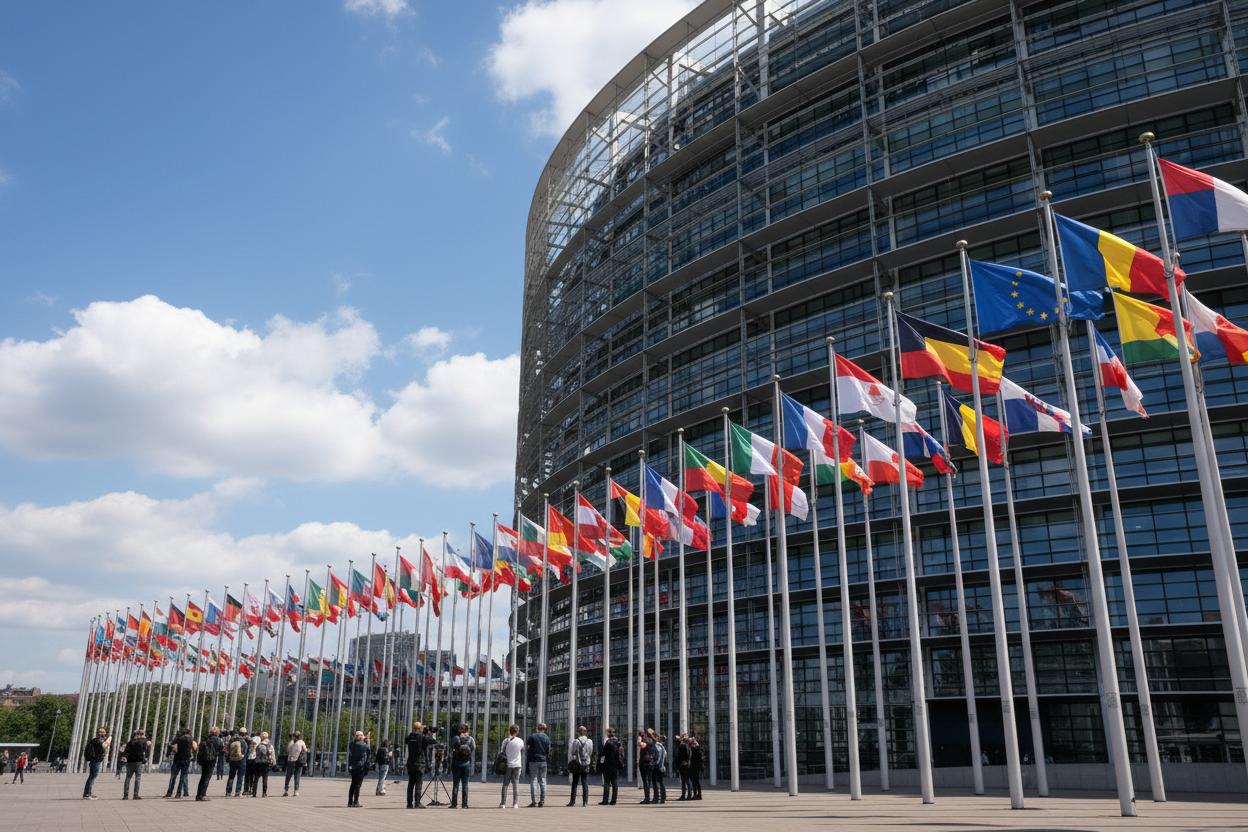
EU Parliament Passes New Digital Privacy Legislation
Comprehensive data protection reforms set to reshape how tech giants operaten

EU Parliament Passes New Digital Privacy Legislation
Comprehensive data protection reforms set to reshape how tech giants operaten

EU Parliament Passes New Digital Privacy Legislation
Comprehensive data protection reforms set to reshape how tech giants operaten
EU Parliament Passes New Digital Privacy Legislation
Comprehensive data protection reforms set to reshape how tech giants operaten
