Putin NATO warning 2026
Friday, April 17, 2026 Trusted by millions worldwide Back to News Politics Putin Warns NATO: Typhon Missiles and Baltic Tensions...
Read More → 
Friday, April 17, 2026
Trusted by millions worldwide
Putin NATO warning 2026 : Putin issues ‘military-technical response’ warning in televised Kremlin address. US Typhon systems confirmed for frontline NATO deployment by late 2026. Estonian government reports ongoing GPS jamming and cyber incidents. NATO Secretary-General Rutte describes Russia’s language as ‘unacceptable and destabilising.’ Suwalki Gap defence exercises accelerated.
President Vladimir Putin issued a direct Putin NATO warning on April 17, 2026. Speaking in a televised address from the Kremlin, he stated that any permanent NATO military infrastructure including missile systems established in Finland or Estonia would trigger a ‘military-technical response’ from Russia. The statement is the most specific threat Putin has directed at NATO’s northeastern flank since Finland joined the alliance in April 2023, and it arrives at a moment when US Typhon mid-range missile systems are confirmed for deployment to frontline NATO states by the end of this year.
NATO Secretary-General Mark Rutte responded within hours. He described Putin’s language as ‘unacceptable and destabilising’ and reaffirmed that Article 5 of the NATO Charter under which an attack on one member is treated as an attack on all remains ‘ironclad and unconditional.’ Estonian Prime Minister Kristen Michal separately stated that Estonia ‘will not be intimidated’ and that Russian pressure ‘only strengthens our resolve to defend our territory within the NATO framework.’
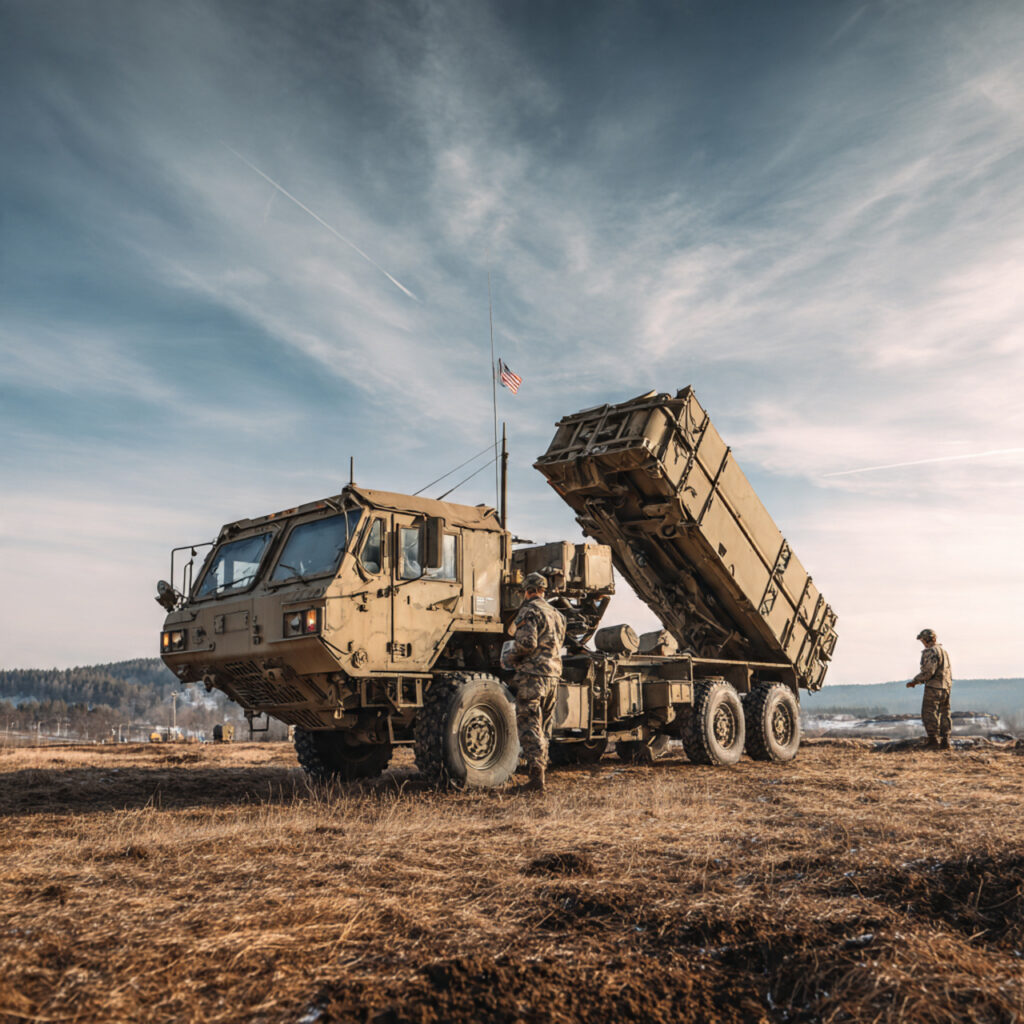
The immediate trigger for Putin’s April 17 address is the Typhon ground-launched mid-range missile system.
The Typhon launcher fires Tomahawk cruise missiles and SM-6 interceptors. Its effective range covers targets deep inside Russian territory from positions in Finland or the Baltic states. The system was first deployed by the US Army to the Indo-Pacific in 2024. It subsequently featured in exercises in Germany in 2024 and 2025. Plans for permanent frontline NATO deployments by late 2026, reported by Reuters in March, appear to have been the specific development that prompted this week’s Kremlin address.
From a Russian strategic perspective, the Typhon’s significance is not primarily defensive. A launcher capable of reaching Moscow from Estonian territory fundamentally changes the risk calculus for any Russian military planner. Putin described the deployment as a ‘strike capability on our doorstep’ language consistent with how Russian officials framed similar concerns about NATO infrastructure following the 2014 and 2022 Ukraine invasions.
Both countries are now central to the security architecture that Russia is challenging.
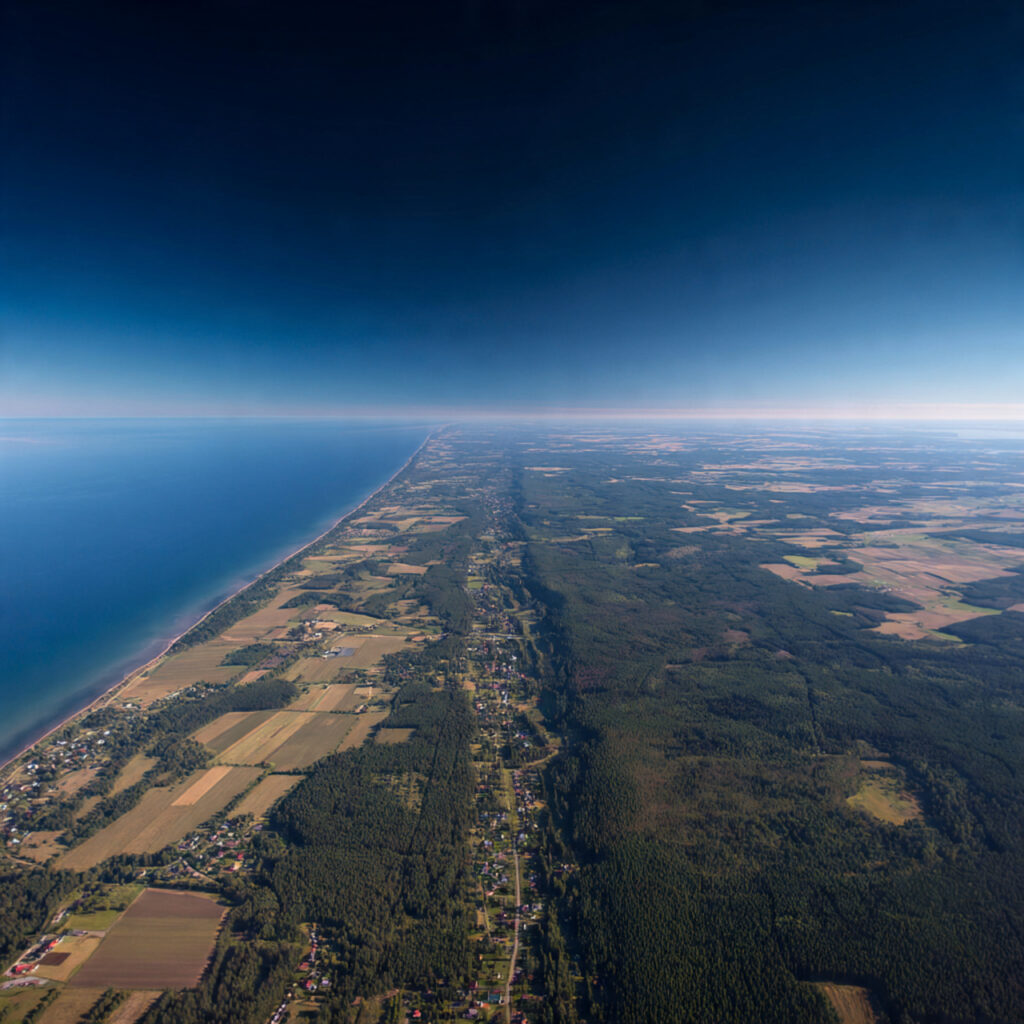
Finland’s NATO membership, which became official in April 2023, eliminated a 1,340-kilometre buffer zone that had separated Russia from NATO’s northeastern flank since 1991. The permanent stationing of NATO brigades on Finnish territory a development formalised in bilateral agreements with the US, UK, and Germany through 2025 means Russia now shares its longest European border with an alliance member hosting foreign troops.
Estonia’s situation is different but equally fraught. The country of 1.4 million people is home to the largest Russian-speaking minority in the Baltic states. Russia has historically used the condition of Russian-speakers abroad as a political and rhetorical tool.
Estonian authorities have ongoing espionage prosecutions involving individuals with alleged connections to Russian intelligence — a pattern that has been consistent for over a decade. Russian state media and official communications regularly frame these prosecutions as ‘persecution of Russian citizens,’ creating a rhetorical pretext. Legislative proposals circulating in the Russian State Duma, reported by the Baltic News Service, would give the Kremlin a legal basis to claim the right to intervene on behalf of citizens prosecuted abroad. Legal analysts cited by the Financial Times describe the proposals as ‘designed to create pretext, not legal substance.’
Below the threshold of formal military confrontation, Russian pressure on NATO’s northeastern members is already measurable and ongoing.
Finland’s National Cyber Security Centre has recorded a significant increase in intrusion attempts targeting power grid infrastructure since January 2026. The Finnish government has attributed these attacks to state-affiliated actors without formally naming Russia. Estonia’s Civil Aviation Authority confirmed in March 2026 that GPS jamming affecting civilian flight navigation has been detected on multiple occasions in Estonian airspace. Similar jamming has been reported by Latvia and Lithuania.
These incidents fall below the threshold that would trigger an Article 5 response. That is precisely their design. Gray zone tactics are calibrated to impose costs and create anxiety without providing NATO with a clear legal basis for a collective defence response.
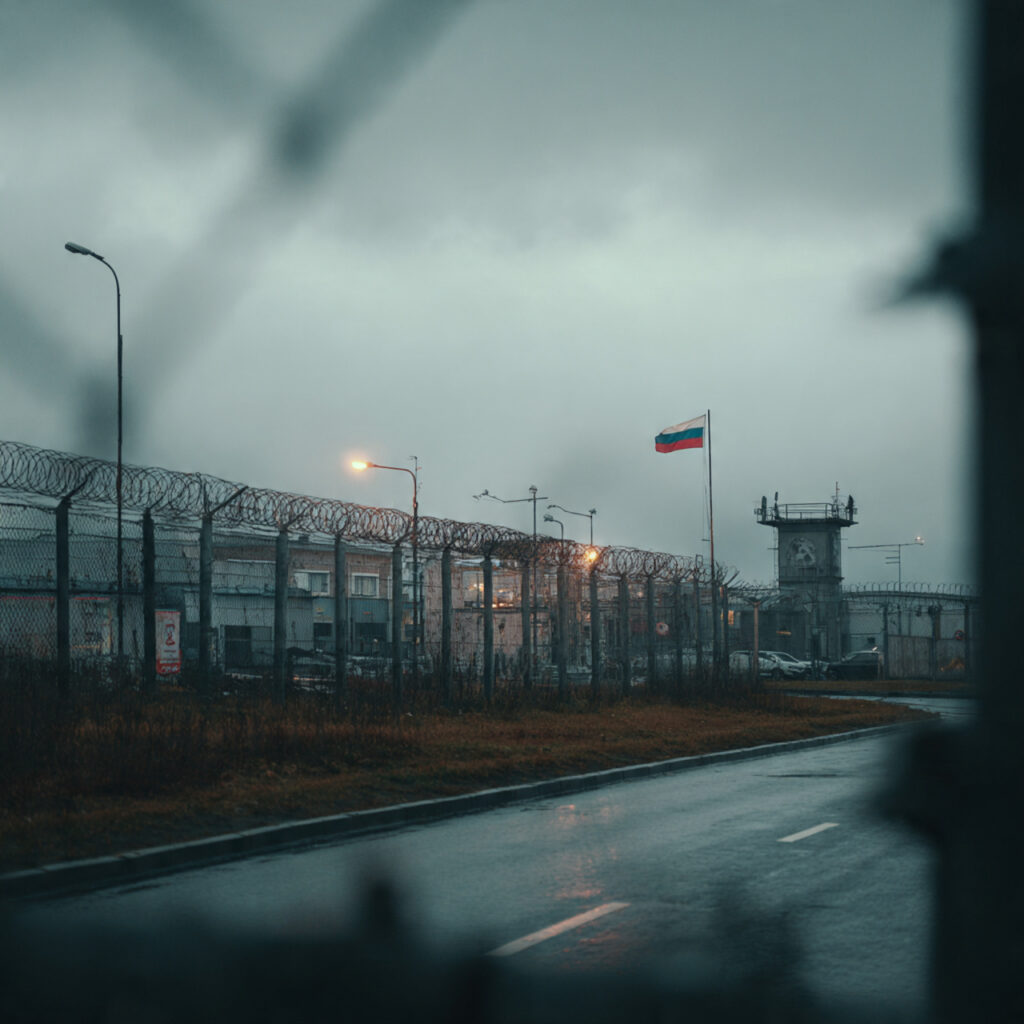
Finland experienced a notable increase in irregular border crossings from the Russian side in late 2023 and into 2024. The Finnish government closed its eastern border crossings in response and the situation stabilised. Security analysts at the Finnish Institute for International Affairs assess that Russia retains the capability to restart migration pressure as a tool of coercive statecraft at any time.
Kaliningrad is Russia’s Baltic exclave. It sits between Poland and Lithuania. It is heavily militarised.
Western intelligence assessments, reported by Reuters, suggest Russia has maintained dual-capable missile systems in Kaliningrad capable of delivering either conventional or nuclear warheads. The extent of any recent changes to Kaliningrad’s nuclear posture is not publicly confirmed. US and NATO officials have stated that they are ‘monitoring the situation closely’ without providing specific assessment details.
The strategic significance of Kaliningrad extends beyond nuclear considerations. It is also the home base of Russia’s Baltic Fleet. Any NATO military operation in the Baltic Sea would need to account for Kaliningrad’s anti-ship and anti-aircraft capabilities. This makes it the single most concentrated Russian military asset in the European theatre.
The Suwalki Gap is a 104-kilometre stretch of land along the Polish-Lithuanian border. It is the only land corridor connecting NATO’s Baltic member states Estonia, Latvia, and Lithuania to the rest of the alliance.
If Russia were to move forces from Kaliningrad westward and Belarusian forces moved south, the gap could theoretically be closed, cutting off the three Baltic states from overland NATO supply and reinforcement. This scenario sometimes called the ‘Baltic Bridgehead’ problem is the central planning challenge for NATO’s eastern defence.
NATO has responded with the Enhanced Forward Presence framework, stationing multinational battlegroups in all three Baltic states and Poland. US, German, British, and other allied troops are permanently rotated through these positions. Exercise tempo in the Suwalki Gap has increased noticeably in 2026, with NATO’s BALTOPS and Iron Wolf exercises both expanded in scale compared to previous years.
No analysis of the current Russia-NATO standoff is complete without addressing the American political dimension.
Putin has historically demonstrated an ability to read shifts in US political will. The Trump administration’s ‘America First’ posture combined with public statements that have at times questioned the value of unconditional NATO commitments creates ambiguity about whether the US would respond to an Article 5 scenario involving a small Baltic state with the same resolve it would bring to a threat against Germany or France.
European governments are not waiting passively for that question to be answered. The EU’s defence industrial strategy, adopted in early 2025, has accelerated domestic procurement of missiles, air defence systems, and ammunition. Poland is on track to have the largest standing army in the European NATO membership by 2028. Germany has restored conscription-lite through a mandatory military service review programme.
The explicit strategic logic is to reduce dependence on the American nuclear umbrella for conventional deterrence not to abandon the US alliance, but to ensure that European conventional capability is sufficient to deter conventional Russian aggression regardless of American political conditions. NATO Secretary-General Rutte has described this as ‘burden-sharing as strategic insurance.’
Putin’s April 17 warning is a calibrated move. It is designed to slow Typhon deployments. It aims to test NATO unity. It signals Russian resolve ahead of the next NATO summit in June 2026.
It is also part of a predictable pattern. Russia has issued ‘red line’ warnings before every significant NATO enlargement since 2004. Those warnings have not prevented the enlargements. They have not, however, been ignored each has required careful management and has carried real escalation risk.
The difference in 2026 is the compression of crises. The US-Iran Islamabad process is unresolved. The Taiwan Strait dialogue is fragile. NATO’s eastern flank is under simultaneous gray zone pressure. No single crisis is at breaking point. But the combination of pressures on the global security system all active at the same time creates a risk environment that most strategic analysts describe as the most complex since the late Cold War.
The Typhon deployments will proceed on schedule unless a diplomatic breakthrough changes the calculus. Putin’s warning is on the record. The alliance’s response is on the record. The next move is in Moscow’s hands.