
Friday, April 17, 2026
Trusted by millions worldwide
Politics
Trump Hints at Pakistan Visit If Iran Signs Nuclear and Peace Deal
Trump Pakistan visit 2026 : Trump confirms he may travel to Islamabad for a signing ceremony if a final agreement is reached. Iran has reportedly reached a conceptual agreement on enriched uranium transfer, per officials cited by Reuters. Ceasefire remains active. Brent Crude holding near $110. Field Marshal designation corrected — Army Chief General Asim Munir is Pakistan’s military lead on negotiations.
Trump Hints at Pakistan Visit If Iran Signs Nuclear and Peace Deal
President Trump signalled on Thursday that he is considering a state visit to Pakistan a step that would be the first by a sitting US President in twenty years but only if Iran signs a comprehensive peace and nuclear agreement. Speaking to reporters outside the White House on April 17, Trump described a potential signing ceremony in Islamabad as ‘the biggest peace event in history’ and confirmed that the Pakistan visit conditions are directly tied to Tehran’s acceptance of the terms currently on the table.
The last US Presidential visit to Pakistan was George W. Bush’s trip in March 2006. A Trump visit would carry enormous symbolic weight for both countries. For Pakistan, it would validate its role as the diplomatic broker of the most consequential Middle East deal in a generation. For Trump, it would provide an unmistakable visual of the deal-making presidency he has sought to project since returning to office.
The Diplomatic Reversal: From Deadlock to Renewed Hope
Forty-eight hours ago, the outlook was bleak. Vice President JD Vance had departed Islamabad without a signed agreement. The 21-hour negotiating session at the Foreign Office ended without a framework deal.
The narrative has shifted sharply since then. Back-channel communication between Islamabad and Tehran continued through the night of April 15–16. Pakistani intermediaries, working alongside Omani observers, reportedly conveyed a revised American offer to Iranian negotiators. That offer included adjusted phasing on sanctions reliefa modification Tehran had specifically requested during the Vance talks.
Trump’s Thursday announcement about a potential Islamabad visit appears calculated to accelerate the process. By making his personal attendance contingent on a signed deal, the President is creating a powerful incentive for all parties. A US Presidential visit to Pakistan would elevate Islamabad’s global standing dramatically. That elevation is something PM Shehbaz Sharif’s government has a strong interest in securing.
The Nuclear Clause: What Iran Must Do on Enriched Uranium
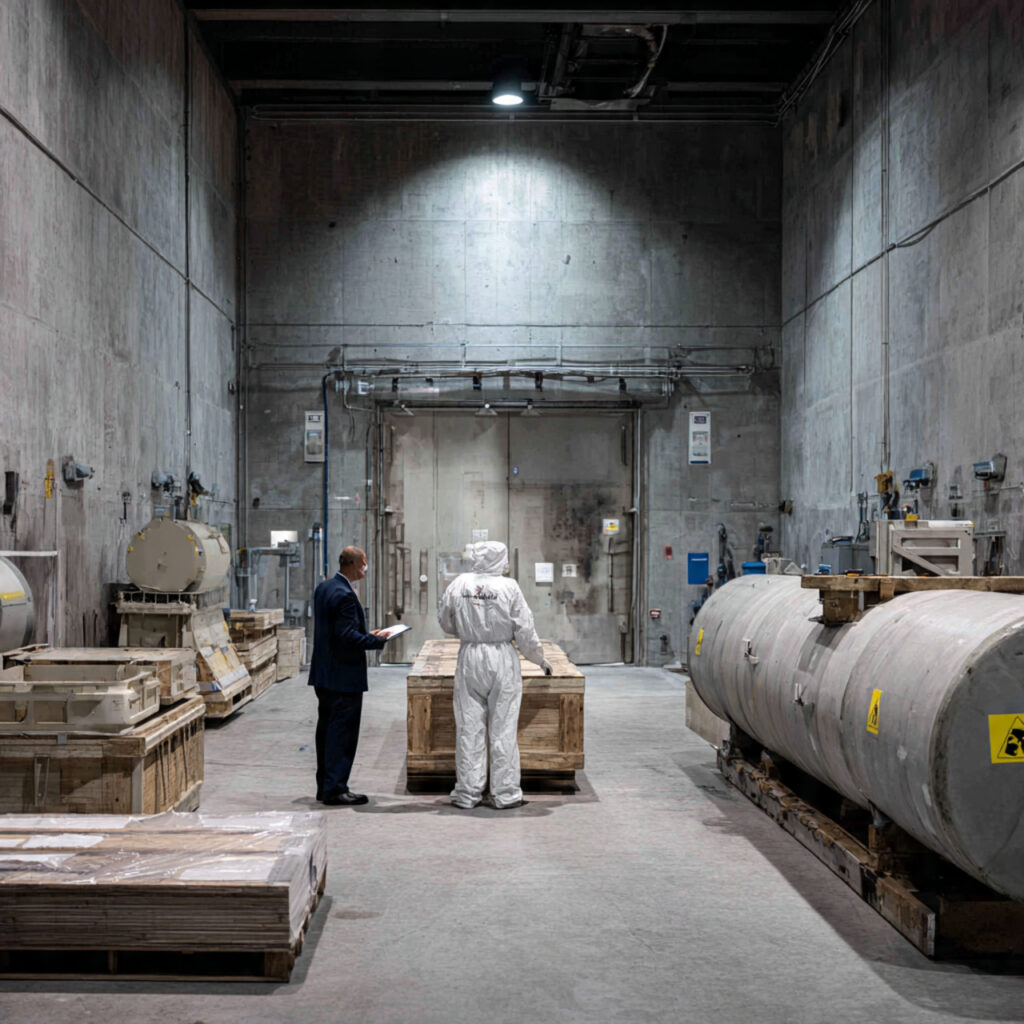
The most technically complex and politically sensitive element of the proposed agreement involves Iran’s enriched uranium stockpile.
Trump has demanded that Iran transfer its entire stockpile of enriched uranium to a neutral third party under international supervision. He referred to the material informally as ‘nuclear dust’ in Thursday’s press briefing. The precise term is enriched uranium material that has been processed to increase the concentration of the fissile U-235 isotope, making it usable for either nuclear fuel or, at higher enrichment levels, weapons.
What 'Conceptual Agreement' Actually Means
Iranian negotiators have reportedly reached a ‘conceptual agreement’ on the transfer, according to officials familiar with the talks cited by Reuters. This is not a signed commitment.
A conceptual agreement means both sides accept the idea in principle. The specific terms where the uranium goes, who supervises the transfer, what monitoring mechanisms apply, and what Iran receives in return remain to be negotiated in detail. The International Atomic Energy Agency would need to be central to any transfer process. IAEA Director General Rafael Grossi has not commented publicly on the reported agreement as of publication.
The 20-Year Enrichment Restriction
Beyond the immediate stockpile transfer, Trump is pressing for a permanent ban on enrichment above a specified threshold for a twenty-year period. This demand goes significantly further than the 2015 JCPOA nuclear deal, which allowed limited enrichment and had a fifteen-year sunset clause.
Iran’s government has publicly described any permanent enrichment restriction as a violation of sovereign rights. Whether the ‘conceptual agreement’ on the stockpile transfer extends to acceptance of the enrichment ban is not confirmed. Iranian Foreign Minister Abbas Araghchi said on Thursday only that ‘all technical issues remain under discussion.’
Pakistan's Indispensable Role: Sharif, Munir, and the Bridge That Held
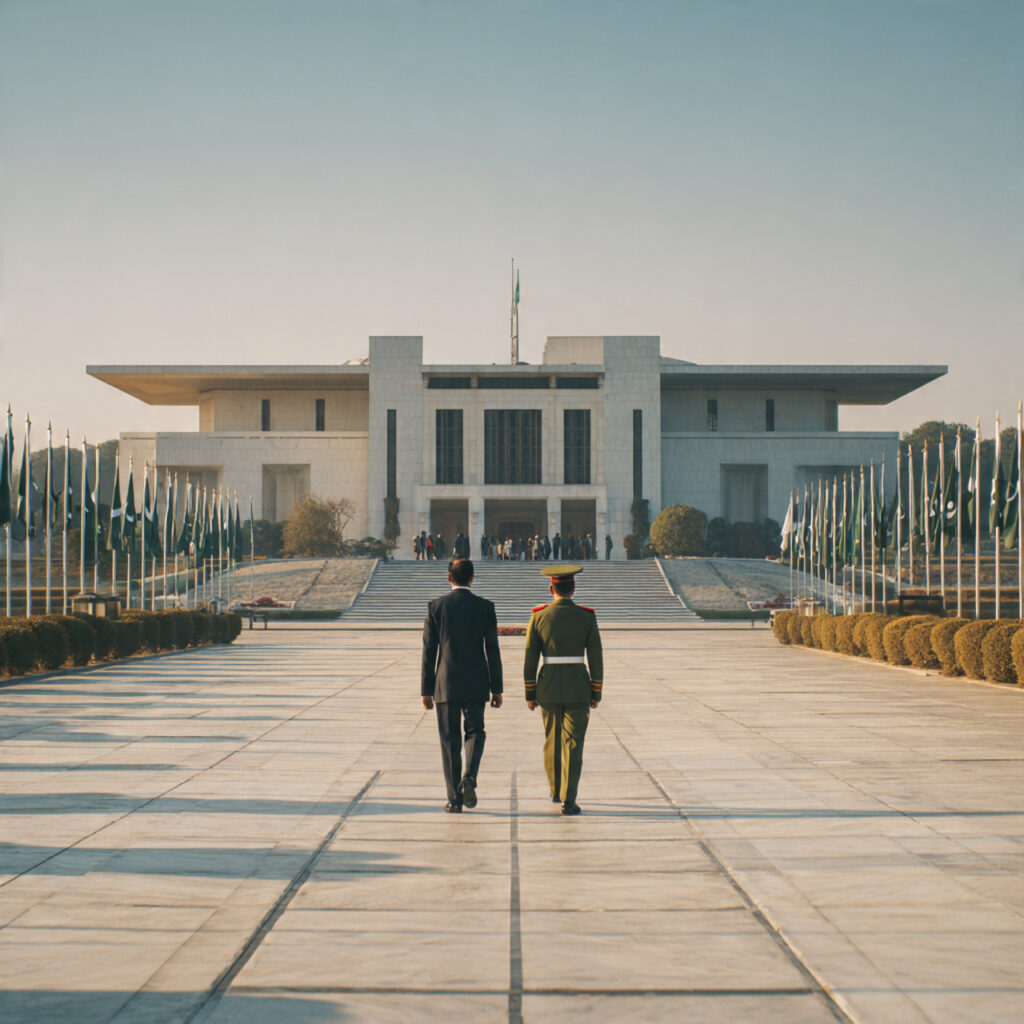
The Islamabad process has survived a summit failure, a VP departure, and an oil price spike. That survival is largely a function of Pakistan’s sustained commitment to the mediating role.
PM Sharif and Army Chief Munir: A Coordinated Strategy
Prime Minister Shehbaz Sharif and Army Chief General Asim Munir have operated as a coordinated team throughout the Islamabad process. This is significant. Pakistani mediation efforts in the past have sometimes been undermined by civil-military disagreements over foreign policy objectives. In this case, both civilian and military leadership appear aligned on the strategic value of the mediating role.
Sharif has focused on the diplomatic optics maintaining the trust of both delegations, managing the international media narrative, and keeping Islamabad positioned as the neutral venue of choice. Munir has focused on the operational security dimension, ensuring that the ‘Red Zone‘ hosting environment meets the standards that both the US Secret Service and Iranian security services require.
Pakistan’s foreign policy establishment has also leveraged its Gulf relationships. Saudi Arabia and the UAE both of whom have significant economic interests in a stable Hormuz have reportedly provided quiet encouragement to Iranian negotiators through separate back channels, reinforcing the message that a deal is in the region’s collective interest.
The Vance Framework: What Was Actually Secured
Vice President Vance’s Islamabad visit is now being reassessed. At the time, it appeared to end in failure. The full picture is more nuanced.
According to officials cited by the Financial Times, Vance secured a preliminary framework during his April 11–12 visit. This document identified the specific gaps remaining between the two positions and established a structured process for bridging them. The framework described in the FT report as a ‘letter of procedural intent’ rather than a policy agreement gave Pakistani mediators a clear mandate to negotiate on the remaining gaps.
That mandate is what enabled the back-channel progress of April 15–16. Trump’s potential Islamabad visit, if it materialises, would arrive at a ceremony prepared by the groundwork Vance laid. The political dynamic is calculated: Vance does the difficult negotiating, Trump arrives to take the final signature.
The Economic Stakes: Oil, Inflation, and the Cost of a Deal
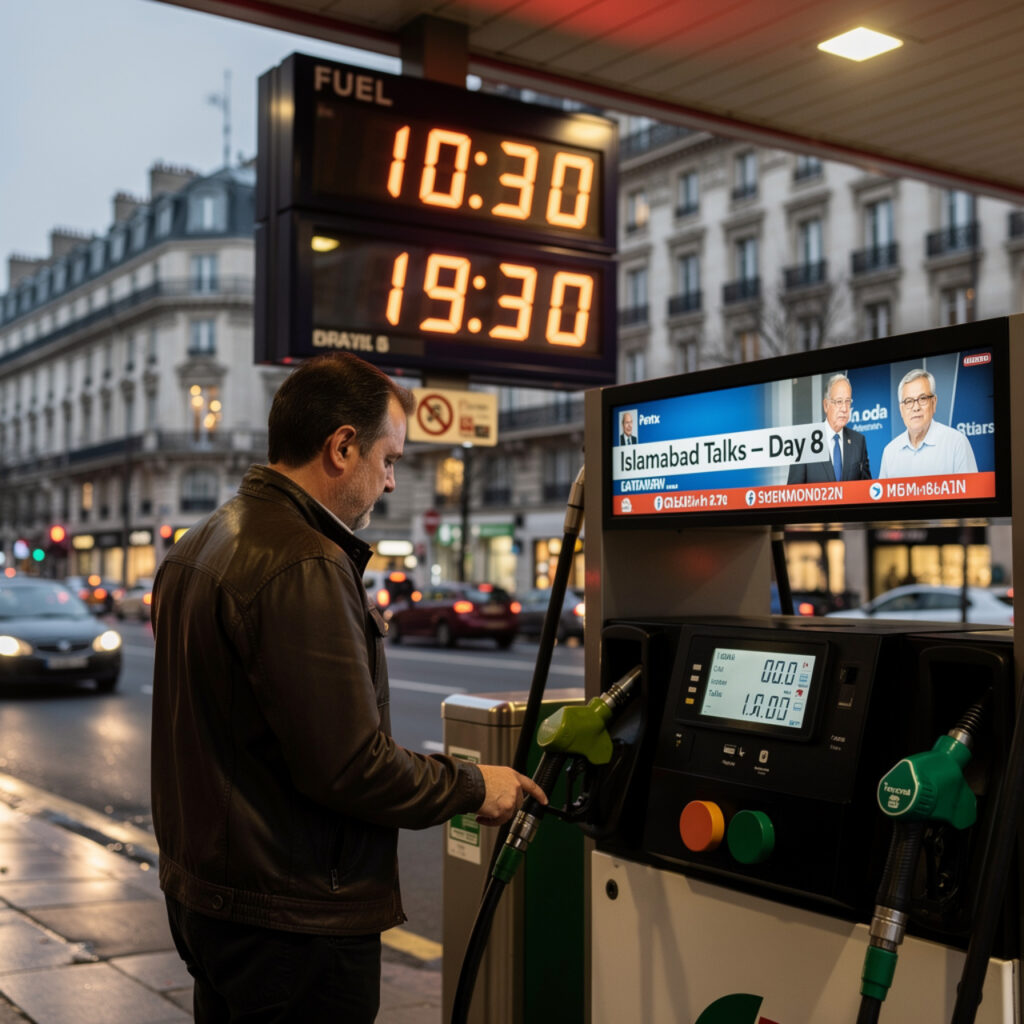
Trump’s prediction that ‘oil goes way down, and goes down fast’ if a deal is signed has strong analytical support.
Brent Crude is currently trading near $110 per barrel down from the $140 peak during the height of the Hormuz blockade but still significantly above pre-crisis levels of around $75. Energy analysts at Goldman Sachs estimate that a signed agreement restoring full Hormuz access could push prices back toward $85–$90 within three weeks as shipping insurance premiums normalise and tanker routing returns to standard patterns.
The downstream effect would be material. European petrol prices, North American diesel costs, and Asian LNG import prices are all elevated by the Hormuz disruption premium. A durable deal removes that premium. For households from Sydney to Stuttgart and Seoul, the economic impact of the next 48 hours in Islamabad is direct and measurable.
What Happens in the Next 48 Hours
The window is narrow and the pressure is immense. The ceasefire expires on April 22 five days from today. A signed framework agreement must be in place before that deadline if Trump’s Islamabad visit is to be viable.
Pakistani mediators are expected to present a revised consolidated text to both delegations on Friday, April 18. The text will incorporate the conceptual uranium agreement and the adjusted sanctions phasing from the revised American offer. Both sides have until Sunday evening to confirm acceptance.
If both accept, a signing ceremony could be scheduled as early as Monday, April 20. Trump’s travel logistics would require a minimum of 24 hours to finalise. The window is tight. It is not closed.
If Iran rejects the revised text, the ceasefire enters its final days without a framework. The military readiness postures on both sides remain at elevated levels. The consequences of a failure are as clear as the consequences of a success. Islamabad is still the bridge. Whether both sides choose to cross it is the only question that matters right now.
Frontier Affairs will update this report as developments emerge. Follow our live coverage feed.
Related News

Trump Pakistan visit 2026
April 17, 2026 | by ALI ASLAM
Friday, April 17, 2026 Trusted by millions worldwide Back to News Politics Trump Hints at Pakistan Visit If Iran Signs...
Read More → 
FA Cup 2026 semi-finals
April 17, 2026 | by mavia fazal
Friday, Aprail 17 2026 Trusted by millions worldwide Back to News Sports FA Cup Drama 2026: Semi-Final Showdowns Set for...
Read More →